
Rodent Control in Lawton, OK
If you have heard scratching in the attic or found droppings in the pantry, you aren’t imagining things. Rodent problems in Lawton start quietly, then get loud fast. Don’t wait until the damage is obvious.
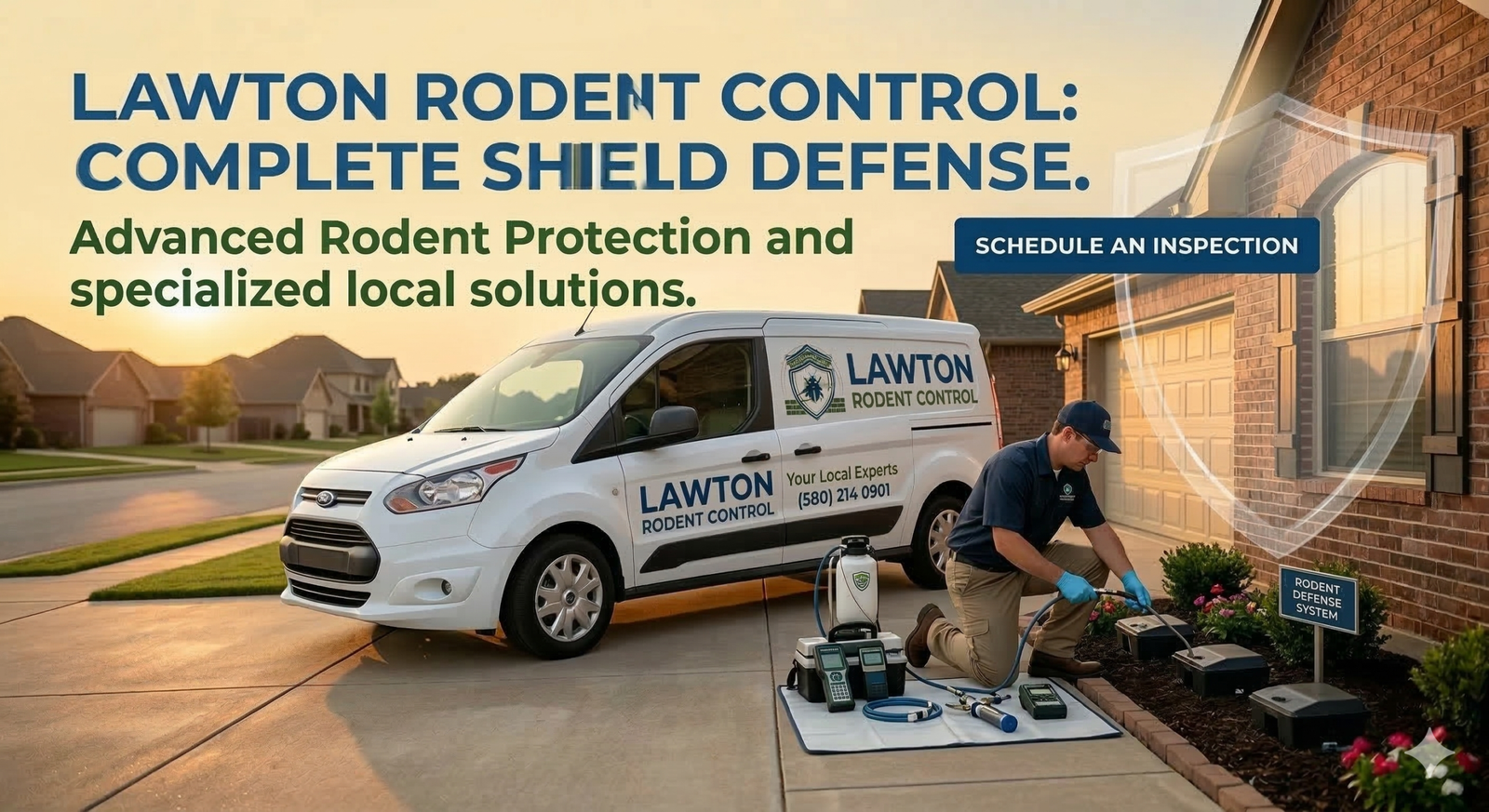
Beyond the Scratching: A Serious Health Risk
Rodents are masters of structural infiltration. They don’t just contaminate food; they chew through electrical wiring, damage insulation, and leave biohazardous waste in areas you may not find for months.
At Lawton Pest Defense, we understand the stress of a rodent invasion. Our goal is simple: find the activity, figure out how they are getting in, and remove the immediate problem. We follow strict sanitation and exclusion protocols to ensure your home returns to being a safe, quiet environment.
Why Lawton Homes Need Exclusion
Seasonal Shelter: Our regional “invader season” late in the year pushes rodents into Lawton attics and crawlspaces seeking warmth.
Health Awareness: The CDC warns that rodents harbor bacteria. Safe, wet-disinfectant cleanup of droppings is vital to prevent illness.
The Seal Matters: Trapping alone isn’t enough. If the entry gap under the garage door or the pipe penetration stays open, the problem will return.
“Professional rodent control is a system: confirm activity, identify zones, reduce population, close access, and monitor.”
More Than Just Mouse Traps
A lot of people think rodent control means setting a trap and catching the animal. It is rarely that simple. Effective rodent control is a system involving five connected parts.
1. Confirm Activity
We look for signs like droppings, gnawing, odor, rub marks, shredded nesting material, or scurrying sounds. Identifying the specific signs tells us exactly what we’re fighting.
2. Identify Zones
Are they in the attic? The garage? Kitchen voids? Crawl space? This matters because mice and rats do not behave the same way or follow the same routes.
3. Population Reduction
We use animal traps, lockboxes, or secure bait stations in and around the home and attic to remove the immediate threat effectively and safely.
4. Close Access Points
This is the long-term fix. We seal utility gaps and pipe penetrations with metal or concrete to stop the real problem: how they are getting in.
5. Cleanup & Monitor
Sanitation, food storage changes, and ongoing monitoring programs ensure the property stays resistant to re-entry and safe for your family.
Need Help Now?
Don’t wait for the smell to show up. Our specialists are ready to help.
Call (580) 214-0901The Rodent Control Journey
We listen first
Most people begin with one clue—droppings in the pantry or a scratching sound above the ceiling. We start with what you are seeing, hearing, or smelling to guide our strategy.
Inspect activity zones
We check the attic, garage, kitchen, and utility penetrations. A technician needs to check both inside and outside because rodent entry often starts at the structure perimeter.
Identify pressure points
This means finding where they feed, nest, and enter. It can include gaps around pipes, missing vent screens, worn door bottoms, or clutter near the slab line.
Treatment recommendation
The plan may involve snap traps, catch-remove-release, or secure bait stations. We prioritize safety around pets and children when placing materials.
Exclusion & Prevention
We want the property to be less inviting after service than before it. We seal gaps with metal or concrete and offer practical advice on food storage and clutter reduction.
Professional Tools and Methods
Snap & Live Traps
One of the most effective capture tools when traffic patterns are known. We also offer catch-remove-release options for humane capture.
Bait Stations & Lockboxes
Secure, rodent-proof stations designed to protect children and pets while placing materials directly in target movement zones.
Exclusion Materials
Durable metal mesh, concrete patching, hardware repairs, and door sweep replacements are the foundation of long-term control.
Protective Cleanup
We follow CDC guidelines for biohazard cleanup, using wet disinfection and paper towels to avoid stir-up of airborne contamination.
Monitoring Programs
Not every problem ends in one visit. We offer follow-up checks and ongoing trap monitoring to ensure the colony stays gone.
Attic Remediation
Inspection and cleanup of contaminated insulation or chewed wiring, addressing hidden property damage sneak-ups.
Lawton Neighborhood Context
Lawton has a mix of older neighborhoods and newer subdivisions that change how rodents behave. Older homes in areas like Wyatt Acres or Downtown often have aging seals and utility penetrations that have shifted over time, creating easy entry points.
Newer builds in Pecan Lakes or Eastlake still face risks from garage door edges, attic vents, and landscaping contact points. Local neighborhoods like Pecan Valley, Crosby Park, Park Lane, Rolling Hills, and Grayson all have varied residential layouts that affect rodent entry risk.
Our proximity to the Wichita Mountains Wildlife Refuge means outdoor shelter pressure is a constant local reality. Seasonal shelter pressure from open land and sheds creates movement corridors rodents use as soon as the weather changes.
What Builds Trust in Rodent Service?
Trust comes from clarity. A good experience should include a specific treatment plan, clear safety steps, and practical prevention advice you can actually use.
- Tech explains where activity was found
- Likely entry points are shown or described
- Safety steps for kids and pets are clear
- The follow-up expectation is honest
Regional Service Area
Rodent pressure is not just a downtown or a rural issue—it shows up across southwest Oklahoma. Our broader service region includes:
Rodent Control FAQ
What are the signs of a rodent infestation in Lawton?
Most common signs are droppings, gnaw marks, strange scurrying attic noises, nesting material, holes near the foundation, and food contamination. Local competitors name scurrying attic sounds and gnaw marks as top indicators in southwest Oklahoma.
Is it mice or rats?
It depends on the findings. Many homeowners say “mice” because they haven’t seen the animal directly. The true answer comes from droppings size, movement patterns, and entry point dimensions found during a professional inspection.
Should I vacuum mouse droppings?
No. The CDC recommends wetting droppings and urine with a disinfectant or bleach solution, letting it soak, then wiping it up with paper towels. Dry sweeping or vacuuming disturbs droppings and stirs up airborne contamination particles.
Can rodents damage wiring and insulation?
Yes, that is a major concern. Local Lawton competitors specifically mention damaged electrical wiring or attic insulation as recurring rodent-related problems that lead to expensive structural repairs.
Do I need exclusion work or just traps?
Usually both. Traps reduce the current population, but exclusion—sealing holes with metal mesh or concrete—is what stops the cycle of repeat entry. Without sealing, you’ll be trapping new rodents forever.
Are bait stations safe around pets and kids?
They are designed for safer placement when used correctly. Lockboxes and secure, rodent-proof stations are utilized to keep materials in target zones while preventing access by children and pets.
Need other help?